Sophrologist SEO: how to improve local visibility in 2026
By the Welbeo editorial team · Editorial policy

Good local SEO helps an independent sophrologist appear when people search for a practitioner in their town or look for information about breathing, relaxation, sleep routines or exam preparation. The foundations are a complete and eligible Google Business Profile, a useful website with clear services and location, and trustworthy reviews. This guide sets out a realistic approach without promising Google rankings or therapeutic outcomes.
At a glance
- Start with local visibility: accurate contact details, an eligible Google Business Profile and consistent information across the web.
- Build pages around real search intent: your city, type of session, audience, appointment format and services.
- Publish helpful explanations informed by your genuine professional experience rather than generic keyword-heavy articles.
- Request authentic feedback ethically and protect clients' privacy.
- Monitor results in Google Search Console over time; improvements are not guaranteed or instantaneous.
Why SEO matters for a sophrology practice
Search engine optimization (SEO) helps search engines discover, understand and present useful pages to people searching for a particular service. Google's SEO Starter Guide stresses clear structure, original content and people-first information.
Two channels complement each other:
- Local results, including Google Maps and eligible business listings, which can help nearby prospective clients discover a practice.
- Regular search results, including pages answering questions such as what happens in a first sophrology session or how a relaxation session is organized.
Make sure your public information is accurate before investing in new content. For additional context, see Welbeo's local SEO guide for wellness practitioners and SEO guide for therapists.
Find the right sophrology keywords
Don't focus only on the broad word “sophrologist”. Combine the practice with the information people actually need.
Four useful keyword groups
- Service and location: “sophrologist in Rueil-Malmaison”, “sophrology near me”, or your actual service area.
- Questions and interests: breathing exercises, relaxation routines, sleep habits, concentration and preparing for an event.
- Audience: adults, students, parents, teams or other audiences you genuinely work with.
- Format: individual sessions, groups, online appointments, workplace workshops or in-person sessions.
For example, an article addressing “What happens in a first sophrology session?” may help readers understand your approach better than a generic page repeating your professional title.
Avoid presenting sophrology as a medical treatment for anxiety, chronic pain, insomnia or other conditions. Describe the service accurately and refer people who require diagnosis or treatment to qualified healthcare professionals.
Research keywords without a paid tool
Look at common questions in Google Search, review the terms readers use when contacting you (without exposing private client information), and examine verified queries in Search Console if you own the website property.
Do not assume that every suggested keyword has substantial search volume or guarantees bookings. Choose topics you can explain with specific, useful details.
Optimize your Google Business Profile
Google says local rankings depend primarily on relevance, distance and prominence. Its local ranking guidance explains the importance of complete business information and trustworthy signals.
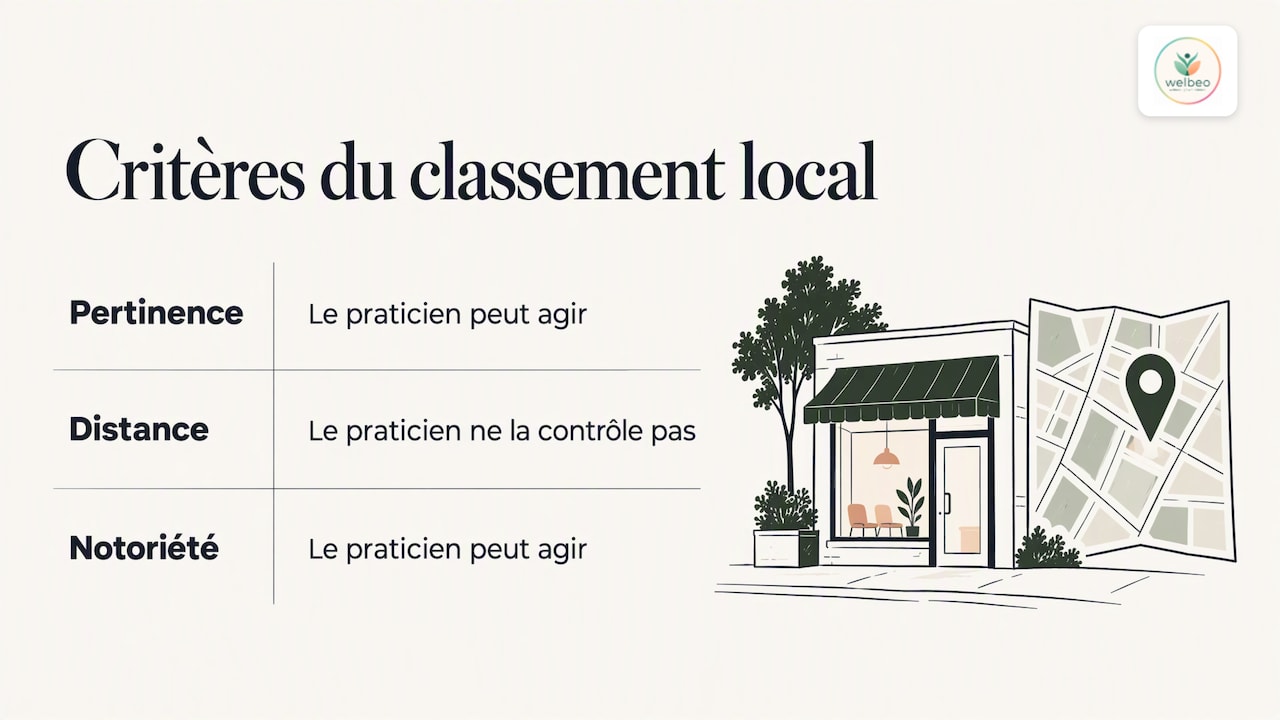
For an eligible practice, review these essentials:
- Select the business category that best describes your actual activity.
- Use your genuine business name; don't add keywords to it artificially.
- Provide accurate address or service-area information under Google's eligibility rules.
- Keep hours, phone, website and booking links current.
- Explain the services and appointment formats you actually offer.
- Add authentic photographs that help visitors recognize your practice.
Important: An online-only practice without eligible in-person customer contact may not qualify for a Google Business Profile. Follow Google's eligibility rules rather than inventing an address.
Keep contact details consistent
A conflicting business name, outdated address or disconnected booking link can confuse prospective clients. Keep the same current information on your website, directories and relevant social profiles.
Reviews: helpful, but privacy comes first
Google states that review volume and ratings can contribute to local prominence. More importantly, balanced feedback can help people decide whether a practitioner is suitable.
Ask for honest, voluntary reviews without incentives or pressure. Do not buy, fabricate or selectively solicit only positive reviews. When responding publicly, do not confirm that a reviewer received a session or disclose health-related details.
Welbeo's guide to collecting Google reviews for therapists explains practical and privacy-conscious approaches.
Structure your practitioner website around useful pages
A sophrologist does not need dozens of near-identical pages. Start with the information a visitor needs to evaluate a practice.
| Page | Main purpose |
|---|---|
| Home | Explain your activity, audience, location and next step |
| Services | Describe each offered session and who it is intended for |
| Appointment formats | Clarify in-person, group and online arrangements |
| Prices | Explain session duration, rates and cancellation conditions |
| About | Present real training, experience and professional boundaries |
| Contact and booking | Make it straightforward to enquire or reserve |
Each page should have a descriptive title, one visible main heading, readable sections and useful mobile presentation. Add local references where genuinely helpful; avoid creating copy-and-paste city pages with only the location changed.
Sophrology is generally described as a mind-body wellness practice. Marketing should not promise cures, replace medical advice or exaggerate supporting evidence.
What should a sophrologist publish?
Choose topics grounded in questions you can answer confidently:
- What happens during the first sophrology appointment?
- What is the difference between sophrology, relaxation coaching and clinical psychological care?
- How do group and individual sessions differ?
- What should someone know before booking an online session?
- How can a practitioner explain breathwork or relaxation activities without making medical claims?
- How can people compare different wellness services?
Google's people-first content guidance encourages original, reliable content that meets genuine visitor needs rather than material produced solely to attract traffic.
For Welbeo practitioners using automated blogging, the same standard should apply: scheduling and AI assistance must not override originality, accuracy or appropriate professional boundaries. Fewer useful articles are preferable to repetitive content published simply to meet a quota.
Measure progress without overpromising results
Google Search Console provides information such as impressions, clicks, queries and page-level search performance for verified properties.
Review:
- Whether important pages are indexable and discoverable.
- Queries combining sophrology with your real practice locations.
- Pages receiving impressions but relatively few clicks.
- Whether business enquiries and bookings are increasing, if attribution is reliable.
- Changes in relevant, authentic reviews.
Tracking every month can be a reasonable starting routine. SEO results can vary widely by geography, competition, website age and content quality; there is no guaranteed timeline. Google's AI search documentation is also useful when assessing claims about visibility in new search experiences.
Welbeo's approach to practitioner visibility
Welbeo combines practitioner listings, professional website tools, online booking and guidance for improving digital presence. A digital-presence readiness score can highlight missing information, but it is not a real-time measurement of Google rankings.
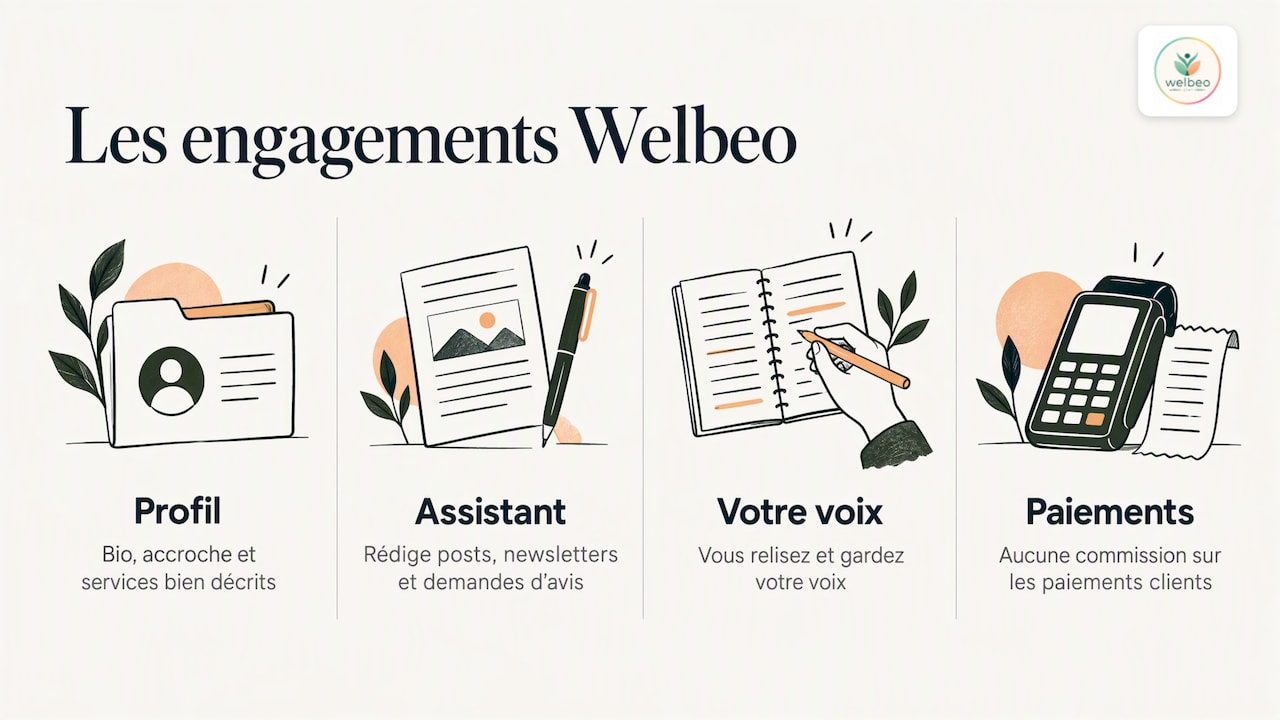
Visit Welbeo's pricing page for current plans and included features, or browse the sophrology practitioner category. Any “0% platform commission” statement should be distinguished from separate card-processing fees where applicable.
Examples of practitioner websites
Although the following practitioners offer complementary wellness practices rather than sophrology, their websites illustrate useful approaches to describing services, location and professional identity:
- Minsana Massage — massage practice in Rueil-Malmaison.
- Stéphanie Avédissian — naturopathy practice and service descriptions.
- Carole Pariat — hypnotherapy practice presentation.
- Laure Manlot — dedicated practitioner website.
These examples do not imply clinical equivalence, an endorsement of their outcomes, or guaranteed SEO performance.
A realistic three-month action plan
Month 1: Check eligibility and complete your Google Business Profile, correct inconsistent contact information, and make pricing, service details and booking clear.
Month 2: Improve your key service pages, ask for authentic feedback appropriately, and confirm that your website works well on mobile.
Month 3: Publish an original answer to a genuine visitor question, review Search Console, and decide which pages deserve improvements.
Repeat the review regularly. Quality and accuracy matter more than a fixed number of articles.
Frequently asked questions
How quickly can a sophrologist improve search visibility?
There is no guaranteed timetable. Changes depend on the current website, the competition and Google's crawling and ranking systems. Review results over several months.
Do I need a website to appear in Google Maps?
An eligible local business can have a Google Business Profile without its own website. However, a website makes it easier to explain services, qualifications, prices and booking arrangements.
Do Google reviews matter?
Google identifies reviews as one possible local prominence signal. Request them honestly and respect the privacy of everyone who contacts your practice.
Can AI help with my articles?
Yes, it can help outline, draft and translate content. Verify claims, add genuine professional insight and avoid scaled publication of repetitive pages. Human review is especially important for healthcare-related topics.