SEO visibility score: what it means and how to improve
By the Welbeo editorial team · Editorial policy

An SEO visibility score estimates how prominently a website appears for a selection of searches. It can be a helpful trend indicator, but it is not a count of visitors, clicks or appointments. Each SEO platform chooses its own keywords, ranking weights and calculation method, so scores from different tools cannot be compared directly.
For an independent massage practitioner, therapist, yoga teacher or coach, the practical aim is straightforward: help the right clients discover accurate descriptions of your real services, and make it easy to book.
At a glance
- Traditional SEO visibility indexes are estimates based on tracked rankings.
- Google Search Console reports impressions, clicks and average positions for your verified website.
- Welbeo's digital-presence readiness score checks aspects of profile and website completeness; it does not measure live Google rankings.
- Local visibility depends on clear service descriptions, an eligible Google Business Profile, genuine reviews and accessible pages.
- Separate search performance from confirmed bookings and avoid promising an SEO outcome.
What does a visibility score measure?
Imagine tracking searches like “massage in Rueil-Malmaison”, “naturopath in Nanterre”, or “yoga classes Paris”. A ranking-based visibility tool estimates your exposure for these queries by assigning more weight to stronger rankings and, in some tools, to popular search terms.
There is no universal formula or universal “good score”. If a platform changes its monitored keyword set, the index can shift without any corresponding change in actual client demand.
What a visibility score cannot tell you
An index does not reveal exactly how many people visited your website, how many enquiries became appointments, or why a prospective client chose you. Ranking highly for an obscure search may produce little actual business value.
Google explains why page experience should be considered holistically rather than reduced to a single technical metric.
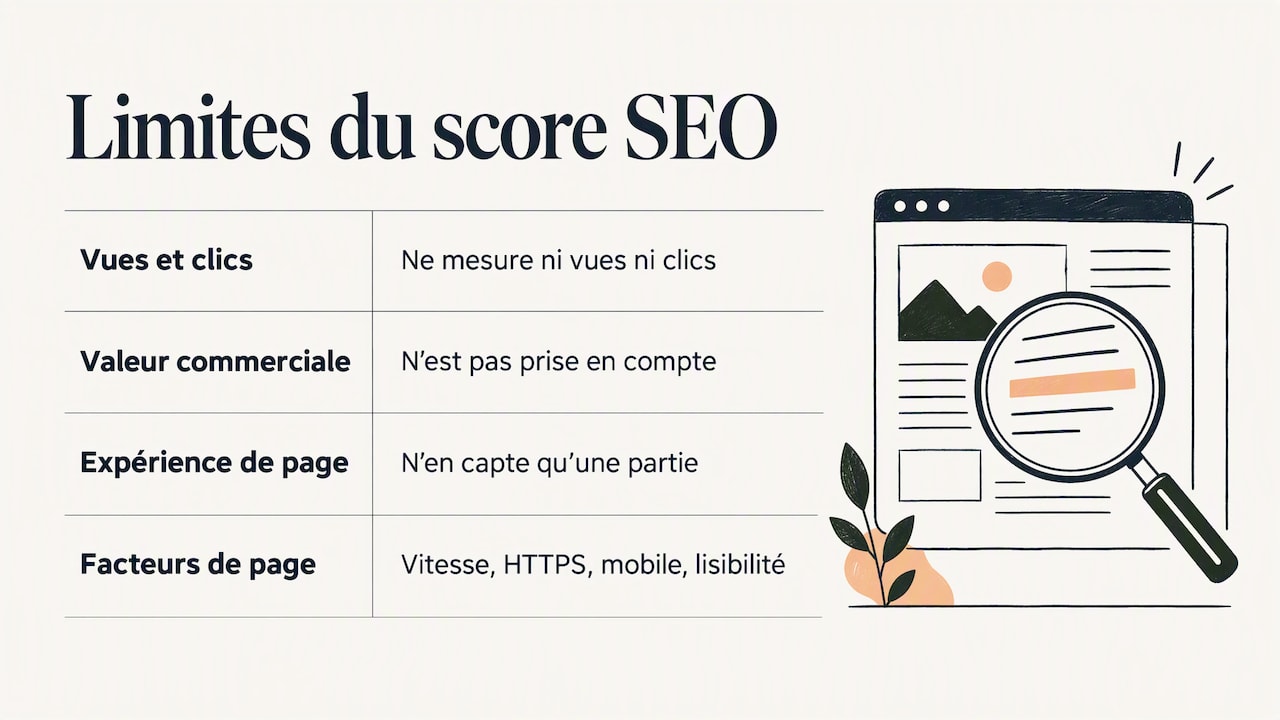
Visibility score, traffic and search position
| Metric | What it represents | Source |
|---|---|---|
| SEO visibility index | Estimated search exposure for selected keywords | Third-party SEO tool |
| Impressions | Appearances of eligible search results | Google Search Console |
| Clicks | Clicks on search results | Google Search Console |
| Average position | Reported average position in eligible searches | Google Search Console |
| Digital-presence readiness | Completeness of selected online-presence signals | Welbeo |
| Confirmed appointments | Actual bookings | Your booking system |
Google documents how Search Console performance metrics work. Even accurate clicks are not equivalent to website visitors, leads or paying customers.
Why practitioners should care
You do not need to compete for thousands of broad keywords. A few accurate service-and-location pages can better serve people searching for your real practice. Describe the technique, session duration, professional qualifications, location, price and how to book.
A clear, trustworthy page is more useful than a keyword-stuffed description.
Five practical improvements
1. Make each service easy to understand
Use specific service names instead of relying solely on general phrases such as “wellness support”. Clearly distinguish appointments in your office, home visits and online consultations. Avoid mass-producing nearly identical location pages.
2. Maintain an eligible Google Business Profile
For practitioners who genuinely serve customers in person, Google Business Profile can support local discovery. Online-only services with no in-person customer contact generally are not eligible. Keep your actual business name, category, public address or service area, opening hours and reservation link accurate.
3. Encourage authentic reviews
Invite honest feedback without rewards, pressure or selectively approaching only happy clients. Remember that public reviews may reveal a client relationship. Never disclose sensitive information when replying.
4. Publish helpful content
Answer questions clients actually ask: what happens in a first session, how to prepare, what a treatment involves and what limitations apply. Avoid unsupported medical claims or guarantees of therapeutic results.
5. Remove booking friction
Ensure the website works on mobile and that service information, availability and reservation links are easy to find. This helps prospective clients irrespective of an SEO score.
Interpret trends cautiously
Compare the same metric from the same provider over equivalent periods. Keyword changes, seasonality, local search locations and algorithm changes can all affect rankings.
If your visibility index rises but clicks do not, investigate the tracked keywords. The index and observed metrics measure different things; one does not automatically invalidate the other.
A simple example: a yoga teacher updates her service pages and listing. Three months later, Search Console shows more impressions for local yoga searches. That is a useful indication of discoverability, but it is not proof of more paying students without booking or other attribution evidence.
How Welbeo approaches visibility
Welbeo's Growth Hub offers digital-presence readiness checks and practical improvement suggestions, including clarity and completeness of practitioner information. Its readiness indicator is not a real-time Google SEO visibility score.
When a practitioner connects Google Search Console, supported search performance data such as clicks and impressions can be viewed separately. Bookings remain their own metric and should not be automatically presented as coming from Google.
Welbeo also offers practitioner profiles, professional websites and online booking tools. Explore Welbeo for professionals and the latest plans.
Real practitioner website examples
To see how practitioners explain their services and local presence, browse Minsana Massage, Stéphanie Avédissian, Carole Pariat and Laure Manlot. These are examples of professional websites, not verified testimonials about SEO rankings or commercial performance.
A four-week plan
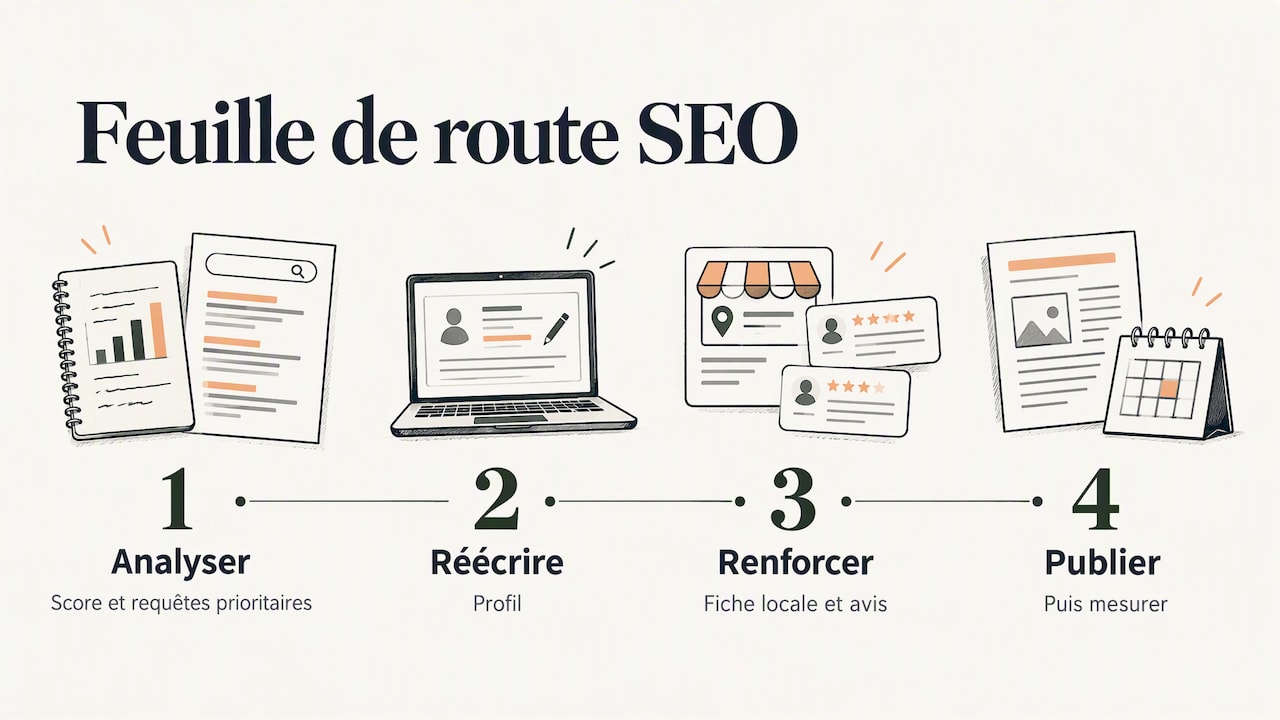
Week 1: establish your baseline
List five to ten relevant service searches and review the previous three months of Search Console metrics, if available. Note the date range and what was measured.
Week 2: improve your service pages
Clarify services, qualifications, appointment format and prices. Check mobile usability and the booking journey.
Week 3: improve local information and trust
Review your Google listing if eligible, correct outdated information and make any request for reviews voluntary and neutral.
Week 4: publish and measure
Publish one genuinely useful answer to a recurring client question. Check indexing, then schedule a later review of meaningful trends. SEO results often need weeks or months.
Common pitfalls
Avoid comparing scores from different systems, targeting overly broad keywords, duplicating content, forgetting mobile readers, using inconsistent contact details, fabricating reviews or publishing unsupported health promises.
Frequently asked questions
What is a good SEO visibility score?
There is no single threshold. Consider the chosen keyword set and whether the trend relates to your actual practice.
Does Welbeo replace Search Console?
No. Welbeo's readiness checks and Google's observed search metrics answer different questions and can complement one another.
How quickly can visibility improve?
Results depend on competition, existing search presence and what changes. No ranking or timetable is guaranteed.
Do I need my own website?
A professional site is useful for explaining your services and allowing bookings. Appropriate local listings and practitioner profiles can also contribute to discovery.